A BUILDING THAT CHANGES WITH THE DAY
Architecture becomes a measure of time when it allows light continually to redraw its boundaries.
The Chichu Art Museum is almost entirely underground, yet natural light continually determines how we perceive it. On Naoshima, Tadao Ando created a museum whose architecture seems to become complete each time someone moves through it.
From a distance, it is barely there.
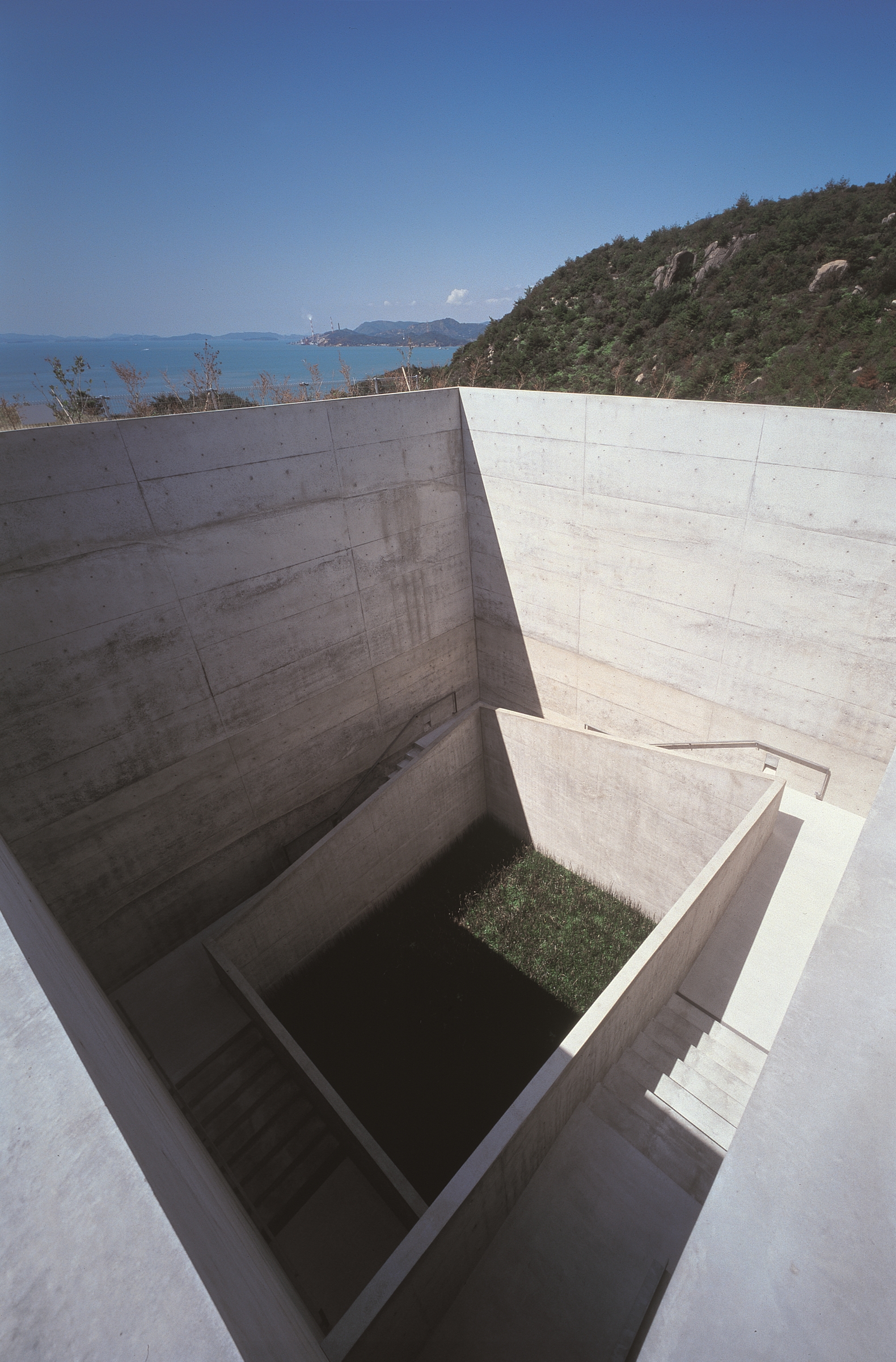
On the island of Naoshima, in the Seto Inland Sea, the Chichu Art Museum occupies the landscape by withdrawing beneath its surface. When it was built in 2004, Tadao Ando placed most of the building underground to preserve the island’s natural profile. The gesture might suggest an architecture seeking to disappear; once inside, however, it becomes clear that the relationship with the outside continues in another form.
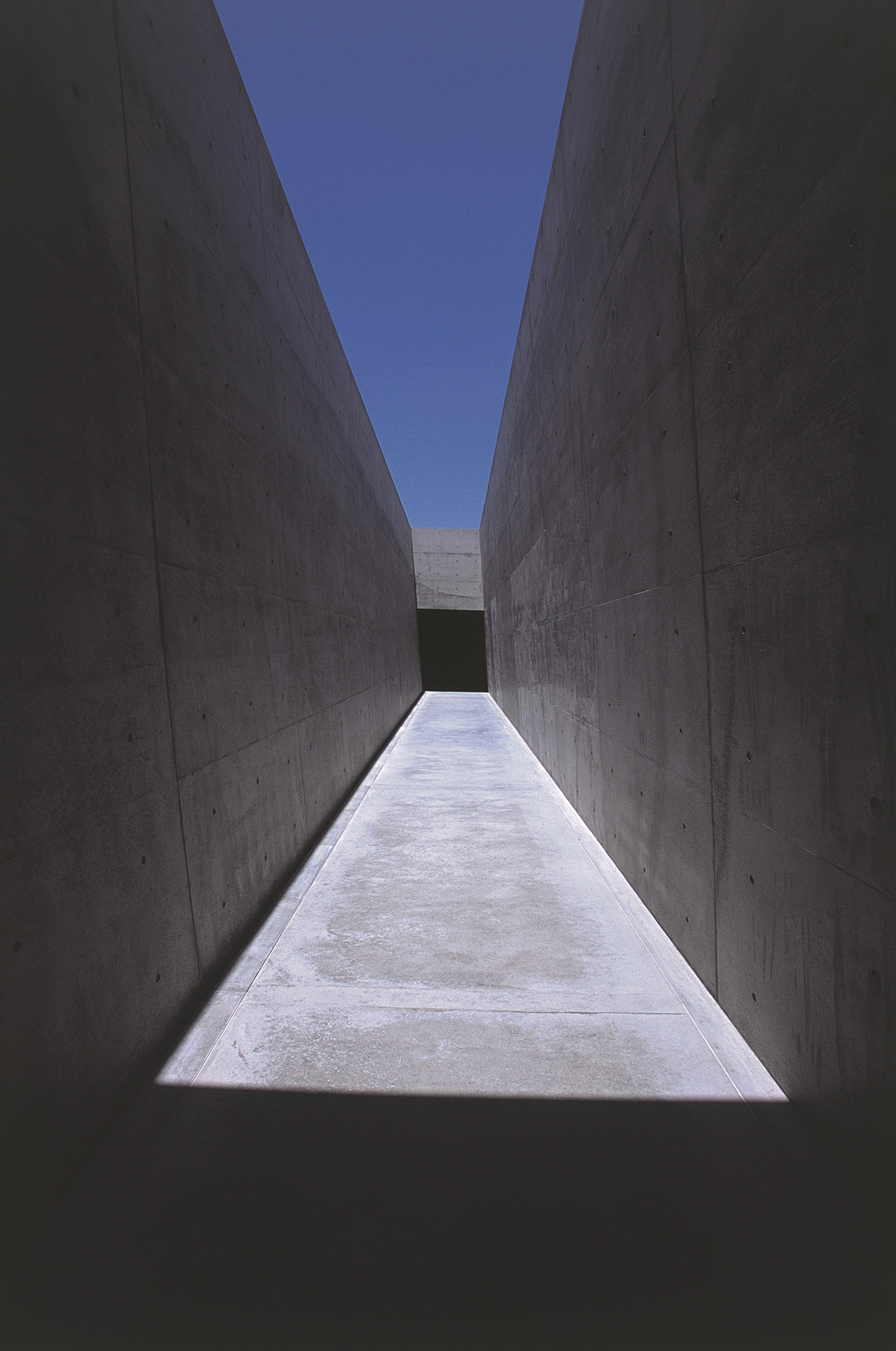
The sky reappears through geometric openings. Light descends into the subterranean spaces, meets the concrete, crosses courtyards and passages, and reaches the galleries. As we move, perceived proportions, directions and luminosity change, as does the body’s relationship with its surroundings.
The museum is underground, but the day continues to enter.
This apparent contradiction is precisely what makes the Chichu Art Museum so compelling: the architecture protects the landscape by constructing within it a system sensitive to what is happening outside.
A museum that contains time
We are accustomed to thinking of architecture as something that, once built, possesses a stable form. The people who move through it change, as do the objects it contains and perhaps its functions, while walls, openings and volumes appear to belong to the permanent part of the experience.
At the Chichu Art Museum, this distinction becomes less clear.
The structure remains, of course, but our perception of it depends upon a material that the architect can direct without ever bringing it to a standstill: natural light. Official Chichu Art Museum documentation describes how the entrance of light changes the appearance of the works and the atmosphere of the spaces over the course of the day and the seasons.
This means that visiting the Chichu Art Museum at ten in the morning and walking through it later that same day is to encounter physically the same building and, in part, a different experience. A concrete surface receives a different intensity; a shadow occupies another portion of the space; what previously emerged may become more discreet.
The architecture has established the conditions, while time continues to work within them.
Designing for a work of art
The relationship becomes even more evident when we enter the spaces dedicated to the artworks.
The Chichu Art Museum permanently exhibits works by Claude Monet, Walter De Maria and James Turrell. The galleries were conceived in relation to what they would contain, and official Chichu Art Museum documentation shows how concretely this relationship entered into the design process.
The Claude Monet Space is perhaps its most delicate example.
During the design phase, models were made to study the dimensions and form of the space. Natural illumination was tested directly through trials and measurements using light meters; the height and dimensions of the suspended ceiling were also studied in relation to the amount of light that would reach the space. Walls and floor were chosen with the material qualities and colours of the paintings in mind: white plaster with a textured surface, and around seven hundred thousand small pieces of Bianco Carrara marble laid by hand.
These are technical details, but they reveal a precise conception of exhibition space. Here the museum does not function simply as a neutral container into which a work is placed after the architecture has been decided. Space, light and artwork are brought into relation during the design process itself.
Monet’s five canvases are viewed in natural light. Consequently, their surroundings participate in their perception: the day, the weather and the season enter the space indirectly and alter the conditions of the encounter.
For paintings born from the tireless observation of light changing upon water, it is difficult to imagine a more coherent relationship.
Light enters the work
With Walter De Maria, the relationship changes again.
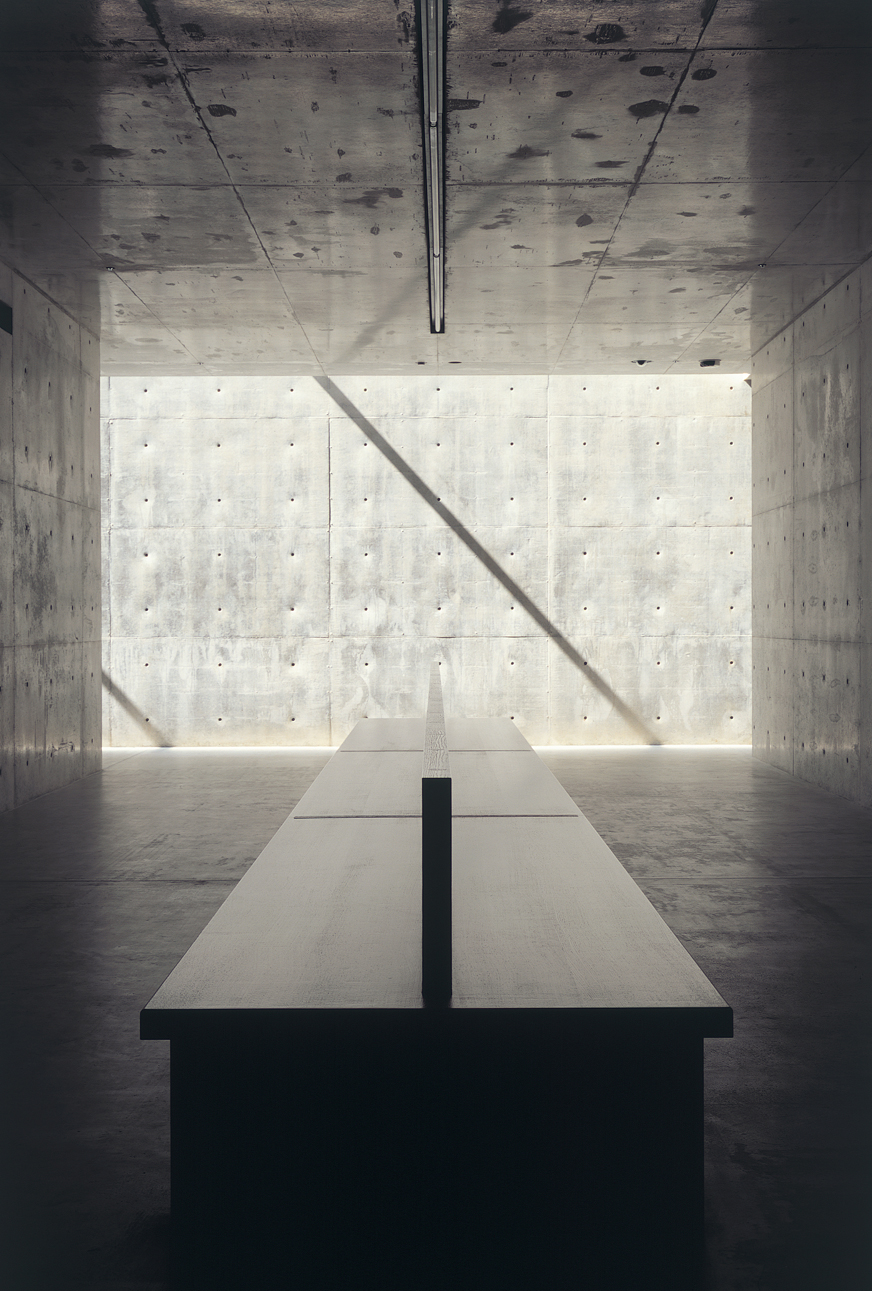
Time/Timeless/No Time occupies a space organised around a granite sphere 2.2 metres in diameter and twenty-seven geometric forms in gilded wood. The space is aligned on an east–west axis and receives natural light from above; as the hours pass, the illumination changes, and with it the appearance of the entire environment.
Here it becomes difficult to establish where the installation ends and the work begins. The sphere, the gilded elements, the concrete, the proportions of the room and the light entering from the ceiling all belong to the same perceptual experience. Official Chichu Art Museum documentation specifies that the entire space was created in accordance with De Maria’s instructions and that the illumination varies markedly according to the time of day.
Light therefore does something other than illuminate an object correctly. It introduces a variable that prevents the experience from ever being perfectly identical to itself.
The work possesses a permanent structure; its appearance remains bound to time.
Walking is part of the architecture
There is another element that photographs can convey only in part: to understand a building, we must move through it.
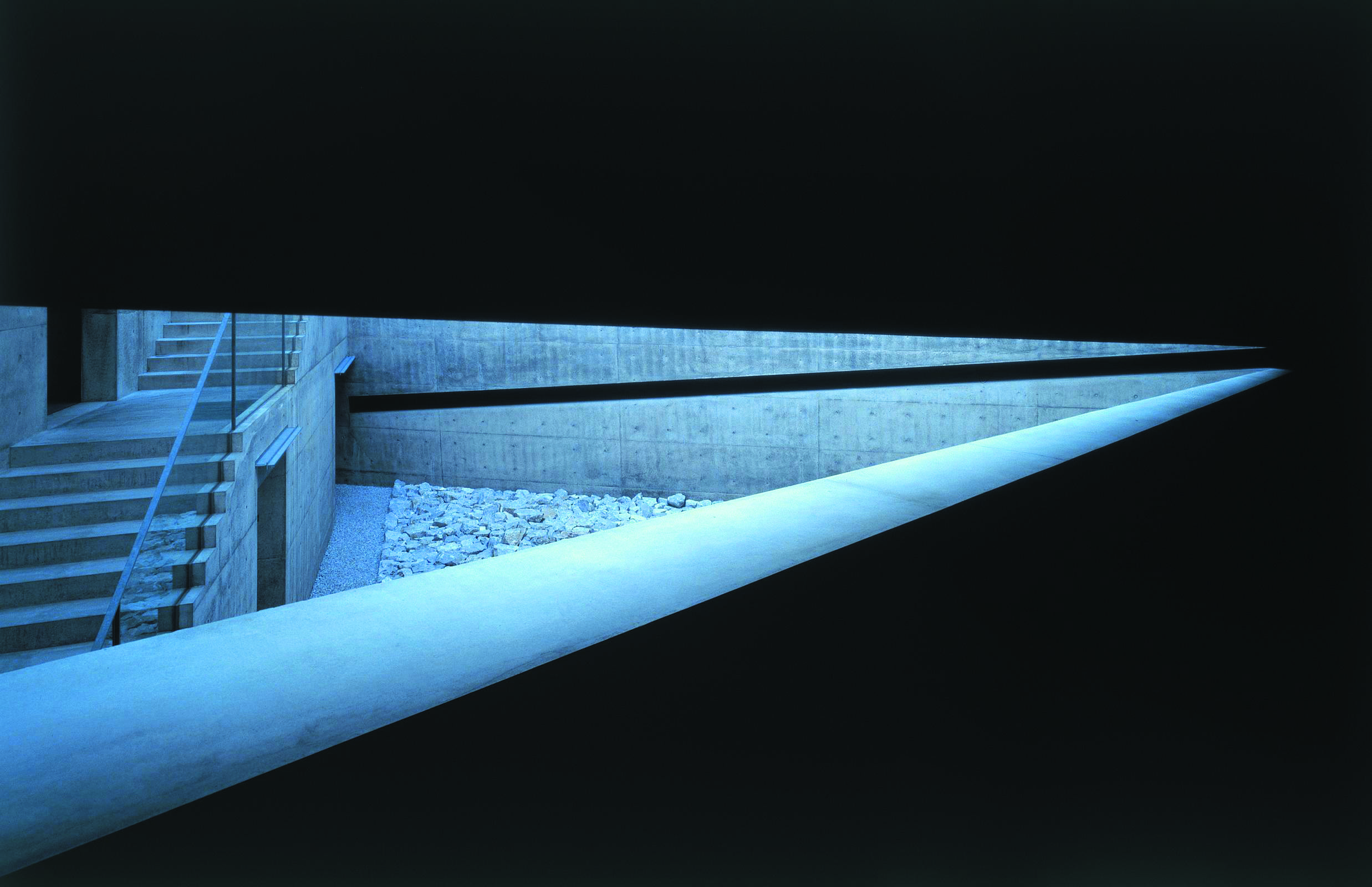
Ando works with walls, geometries and openings, but also with what those elements ask the body to do. A passage narrows the field of vision; a turn interrupts what we were looking at; a courtyard suddenly opens the sky again; a ramp slowly changes our level, and therefore the way in which the next space is encountered.
At the Chichu Art Museum, this dimension becomes especially important because the building offers few continuous external points of reference. The visitor enters the earth and proceeds through a sequence in which light, shadow and geometry progressively direct the experience.
We do not therefore perceive the building from a single ideal viewpoint. We construct it mentally as we walk, bringing together what we have just crossed with what appears before us.
The plan belongs to the architect. The experience of the plan belongs to the visitor’s time.
When architecture relinquishes neutrality
A museum may seek to make itself discreet so that attention can rest on the works. The Chichu Art Museum takes a different path: it brings architecture and art into such a close relationship that separating them becomes of little use.
This is not an interpretation applied to the project afterwards. The history of its construction shows a process in which architect and artists worked by testing their respective requirements against one another; official Chichu Art Museum documentation describes the museum as a whole as one large site-specific work.
This also changes the meaning of the opening question.
Can we design what a person will feel upon entering a space?
No architect can probably determine an experience completely. Every visitor arrives with their own body, attention and memories, and even with a different day behind them. Architecture can, however, construct very precise conditions: it can decide how much sky to allow, how light should enter, how much time is required to reach a gallery, what material to place beneath our feet and what relationship to create between a work and its surroundings.
At that point, designing also means preparing perceptual possibilities.
The Chichu Art Museum makes this especially clear because many of the elements that complete the experience escape the building’s absolute control. Ando can design the opening, while the sky appearing through it will continue to change. He can establish how light will enter the Claude Monet Space, while the intensity of that light will belong to that day, that hour, that season.
Perhaps this is the museum’s most compelling quality: the precision of the design makes room for the variability of experience.
The building was completed in 2004.
Our perception of it continues to change every day.